Tampa Bay homeowner guide
Symptom matrixWarning signs of a possible sewer line problem
A pattern across several drains is more concerning than one isolated slow fixture. Repeated backups, gurgling, wastewater, or unusual wet areas can justify prompt assessment, but these signs do not identify the cause or establish whether the problem is on private property or in the public system.
On this page
The short answer
What to do first
No single gurgle, odor, slow drain, wet patch, or backup proves a sewer-line failure. Concern rises when symptoms repeat, involve multiple fixtures, appear at the lowest drain, coincide with outdoor wastewater, or affect nearby properties. Stop adding water when wastewater can spread and confirm whether the property uses public sewer, septic, or a shared system.
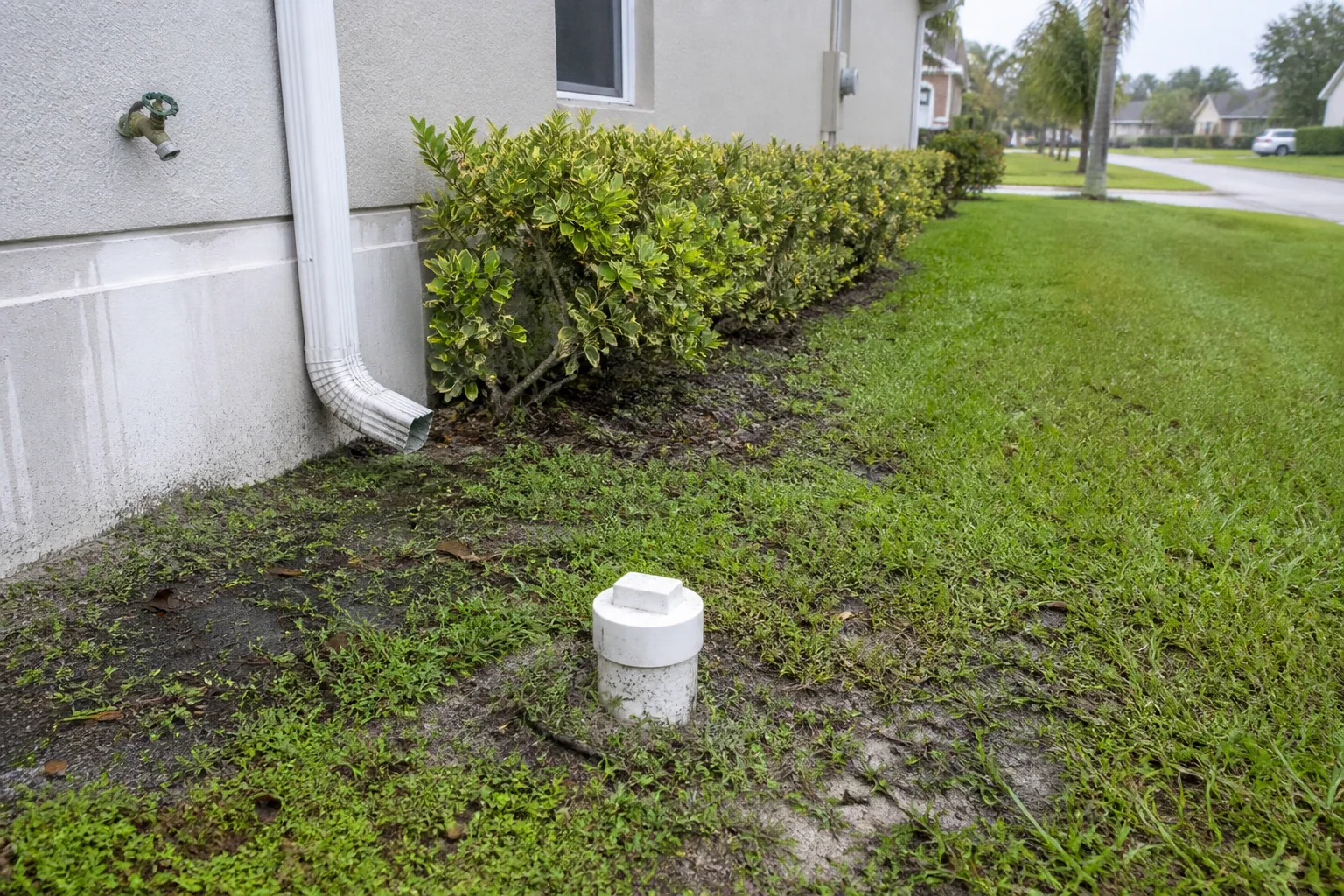
Five things to remember
- Combinations and recurrence matter more than one symptom.
- Wastewater exposure is a safety issue before it is a diagnosis.
- Confirm the public/private/shared/septic boundary before excavation.
- Ask camera and locating providers what was actually visible and what was not.
- Keep a timeline of clearing, camera, repair, utility, and recurrence results.
Print the sewer symptom chronology
Record fixtures, floors, weather, utility reports, wastewater, prior clearing, camera findings, and responsibility boundaries.
Symptom combinations that change the next step
Swipe sideways to see every column| Pattern | Possible boundary | First action |
|---|---|---|
| One slow fixture | Fixture or branch | Stop using it and use the clogged-drain guide |
| Several fixtures or lowest drain | Building drain, lateral, septic, or public system | Reduce water use and arrange assessment |
| Outdoor sewage, odor, or unusual wetness | Lateral, septic, public system, or another source | Keep away and contact the system-appropriate responder |
| Neighbors or street affected | Potential public-system event | Contact the serving utility first |
| Recurring after clearing | Underlying condition unresolved or incomplete assessment | Request the prior record and cause-focused next step |
Confirm the system before assigning responsibility
Separate private lateral from public collection
Ask the utility and plumber which boundary each checked and what evidence supports it.
Reduce flow and use a qualified septic route
Do not open, drive, dig, or pump a flooded system without appropriate guidance.
Notify the responsible building contact
Access, stacks, common lines, governing documents, and damage response can be separate decisions.
Check bill, property records, manager, or utility
Do not authorize excavation based on a guessed connection.
Questions before and after a sewer camera
Before
- What access point and pipe segment is planned?
- Can the camera pass the current restriction?
- Is locating or depth estimation included?
Evidence
- Will the recording show date, direction, distance, and narration?
- Which defects are observations versus interpretations?
- What portions remain unseen?
After
- Request the video and written findings
- Match recommendations to the observed location
- Confirm permit, utility, easement, or excavation questions
Build a recurrence timeline an evaluator can use
First symptom
Record fixtures, floor, weather, water use, odor, sound, and wastewater.
First response
Record utility contact, clearing method, access point, and result.
Evidence
Save camera, location, material, pipe-condition, or system findings with limitations.
Return pattern
Record how long until recurrence and whether the symptom or affected area changed.
Permanent scope
Compare repair alternatives, property boundaries, permits, restoration, and warranty.
A public report and private assessment can both be necessary
A utility can investigate its collection system while a plumber evaluates private building plumbing or the lateral. Keep incident numbers and written findings separate so one responder's boundary is not mistaken for a complete diagnosis.
Related next steps
Use the guide that matches the situation.
How this resource was made
Methodology and limits
The guide groups symptoms by pattern and connects diagnosis questions to private lateral, public sewer, septic, and shared-building boundaries.
- A camera may not pass a blockage or show the outside of a pipe.
- A cleared line does not establish the cause of recurrence.
- Utility responsibility and private-lateral boundaries vary by provider and property.
Sources
Reviewed sources
- Sanitary Sewer OverflowsU.S. Environmental Protection Agency · Reviewed 8/27/2026
- Sanitary Sewer Overflow Frequent QuestionsU.S. Environmental Protection Agency · Reviewed 8/17/2026
- Safety Guidelines: Reentering Your Flooded HomeCenters for Disease Control and Prevention · Reviewed 8/17/2026
- Report Water and Sewer Main Pipe BreaksHillsborough County · Reviewed 8/17/2026
- Prevent Blocked DrainsCity of Tampa Wastewater Department · Reviewed 8/27/2026
Reviewed by Plumbers in Tampa Bay on 8/27/2026.