Tampa Bay homeowner guide
Safety decision guideIs it safe to use plumbing after a Tampa Bay flood?
A post-flood decision guide for Tampa Bay households that separates safe re-entry, drinking-water status, wastewater service, private plumbing, septic saturation, and private-well contamination—so you can pause the right fixtures and call the right authority first.
On this page
The short answer
What to do first
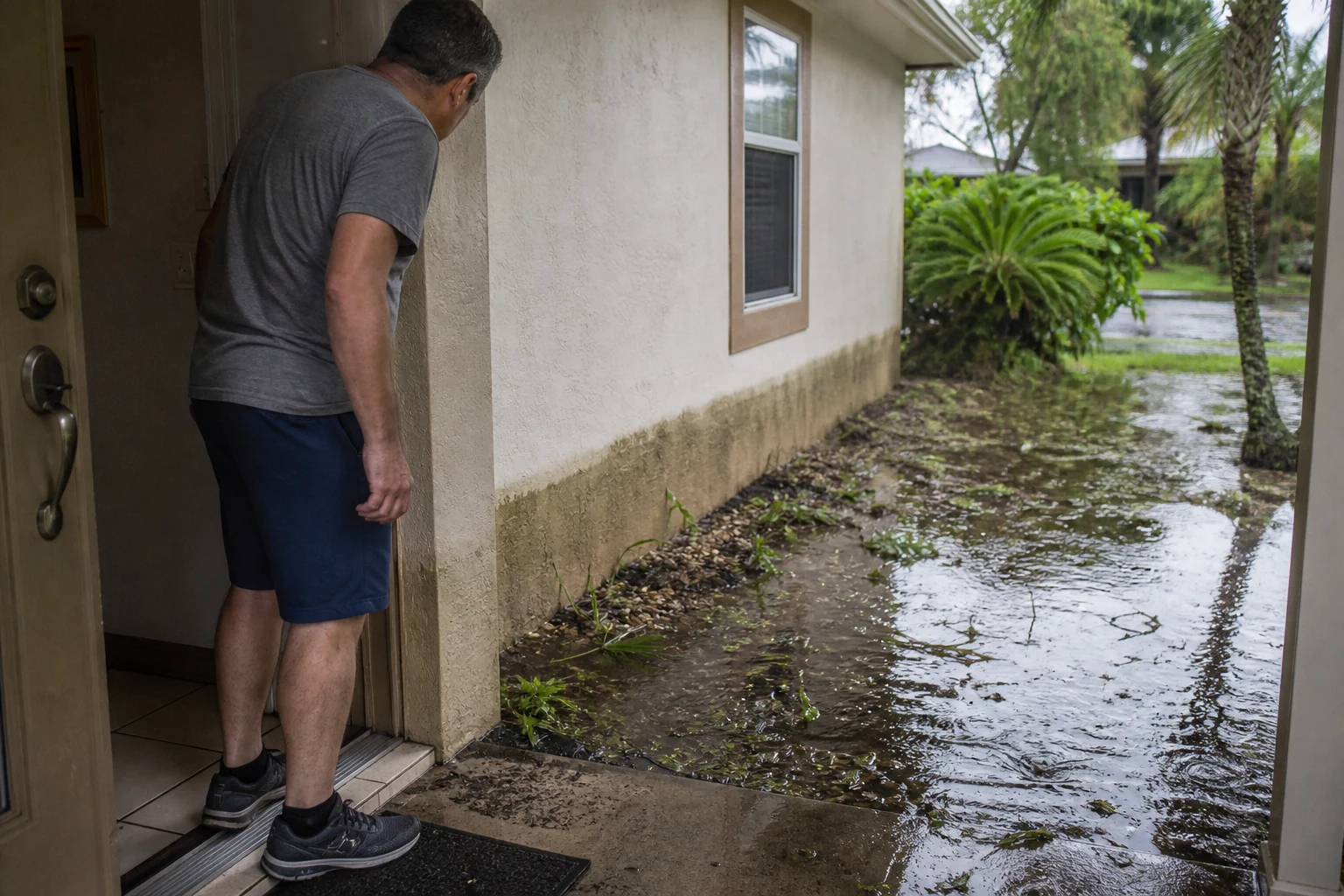
Do not enter a flooded property until the responsible authority says access is safe. Stay out if water may contact electricity, gas is suspected, the structure appears unstable, or sewage or chemical contamination may be present. Once access is safe, check four separate conditions before using plumbing: the current drinking-water notice, the current wastewater or sewer notice, the condition of any private septic system or well, and the condition of the property's own pipes and fixtures. When any one of those is unknown, pause nonessential fixture use and confirm it with the authority or professional responsible for that system.
Five things to remember
- Official evacuation and re-entry instructions come before any plumbing inspection or cleanup.
- Floodwater that looks clear can still contain sewage, chemicals, debris, or electrical hazards; treat unknown water as contaminated.
- A boil-water notice and a sewer-service problem are separate: check both before deciding whether a fixture is usable.
- For a flooded or saturated septic system, reduce water use and do not pump the tank while floodwater or a high water table can create damage or flotation risk.
- Use the local contact matrix to choose emergency services, the utility, a septic or well professional, or a plumber without losing time to the wrong call.
Print the post-flood safety and recovery sheets
Two clean pages: a plumbing-safety decision checklist plus a blank service, notice, test, and recovery record.
Pass the safety gate before checking a single fixture
The first question is not whether a toilet will flush. It is whether the property and the path to the plumbing can be approached safely.
Stay out
Wait for the responsible local authority. Do not enter only because the rain stopped or water appears lower.
Leave and use emergency instructions
Do not cross the water, touch panels or appliances, operate switches, or test equipment. Call 911 or the responsible electric, gas, fire, or emergency authority as conditions require.
Avoid all contact
Keep children and pets away. Do not walk through it to reach a shutoff, drain, appliance, or cleanout.
Pause nonessential fixture use
Check the serving water and wastewater authority, then identify public sewer, septic, private well, and any building-level instructions before adding flow.
Observe from a dry, safe position
Document visible conditions, follow official flushing or return-to-service directions, and route private plumbing damage to a qualified plumber.
Do not diagnose water by color or smell alone
The source changes the next call, but water that looks clear is not proof that it is safe. When the source is uncertain, use the more cautious path.
Treat it as potentially contaminated
CDC warns that floodwater can contain sewage, chemicals, debris, animals, and electrical hazards. Avoid contact and follow public-health and cleanup guidance.
Treat it as wastewater
Stop adding water through connected fixtures, avoid contact, and report a possible public sewer, private lateral, building drain, pump, or septic problem.
Stop the private flow only if safe
Use only a known, safely accessible household or fixture shutoff. Flood exposure can still create separate contamination and electrical concerns.
Use the contaminated-water path
Do not rely on clarity, odor, or where the water settled. Preserve the scene from a safe location and have the appropriate authority or professional identify the source.
Can you flush, shower, wash, or run an appliance?
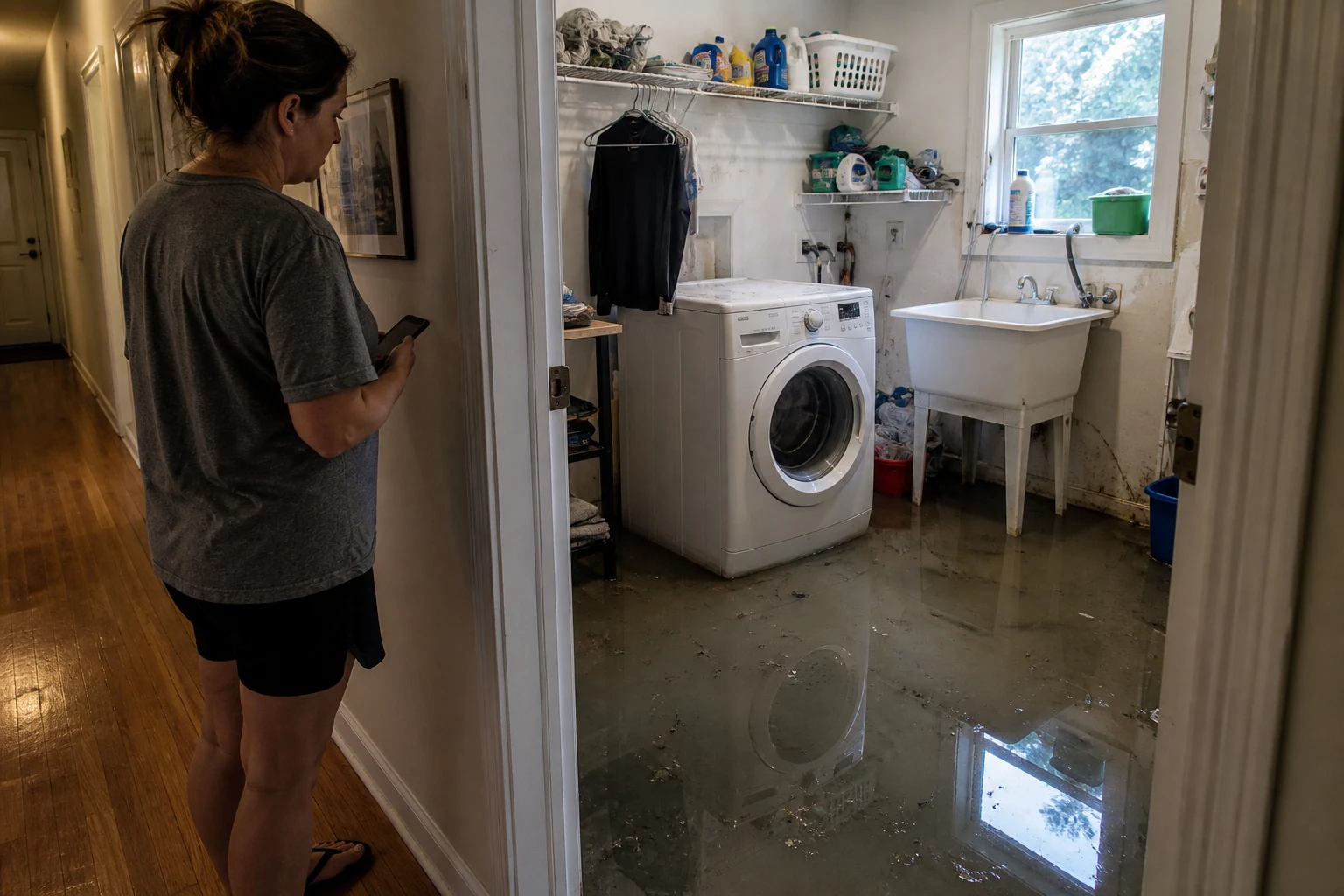
A usable fixture needs both an acceptable water supply and a working place for wastewater to go. Check the row that matches the current condition; do not use a small test flush to prove an uncertain system is safe.
Swipe sideways to see every column| Current condition | Toilets and drains | Sinks, showers, laundry, and dishwasher | Confirm first |
|---|---|---|---|
| Re-entry is not cleared or water is near electricity | Do not enter or test | Do not enter or test | Emergency management or responsible safety authority |
| Active sewer backup, overflow, or wastewater outage | Stop flushing and adding wastewater | Stop nonessential water use; follow the wastewater authority's direction | Serving wastewater utility or building authority |
| Several drains gurgle or back up and neighbors may be affected | Reduce or stop use | Avoid high-flow appliances and showers | Serving wastewater utility before assuming a private clog |
| One fixture backs up; no area-wide notice or shared symptoms | Stop using the affected fixture | Avoid connected fixtures if they trigger the backup | Private plumber after safe access; building contact when shared systems may be involved |
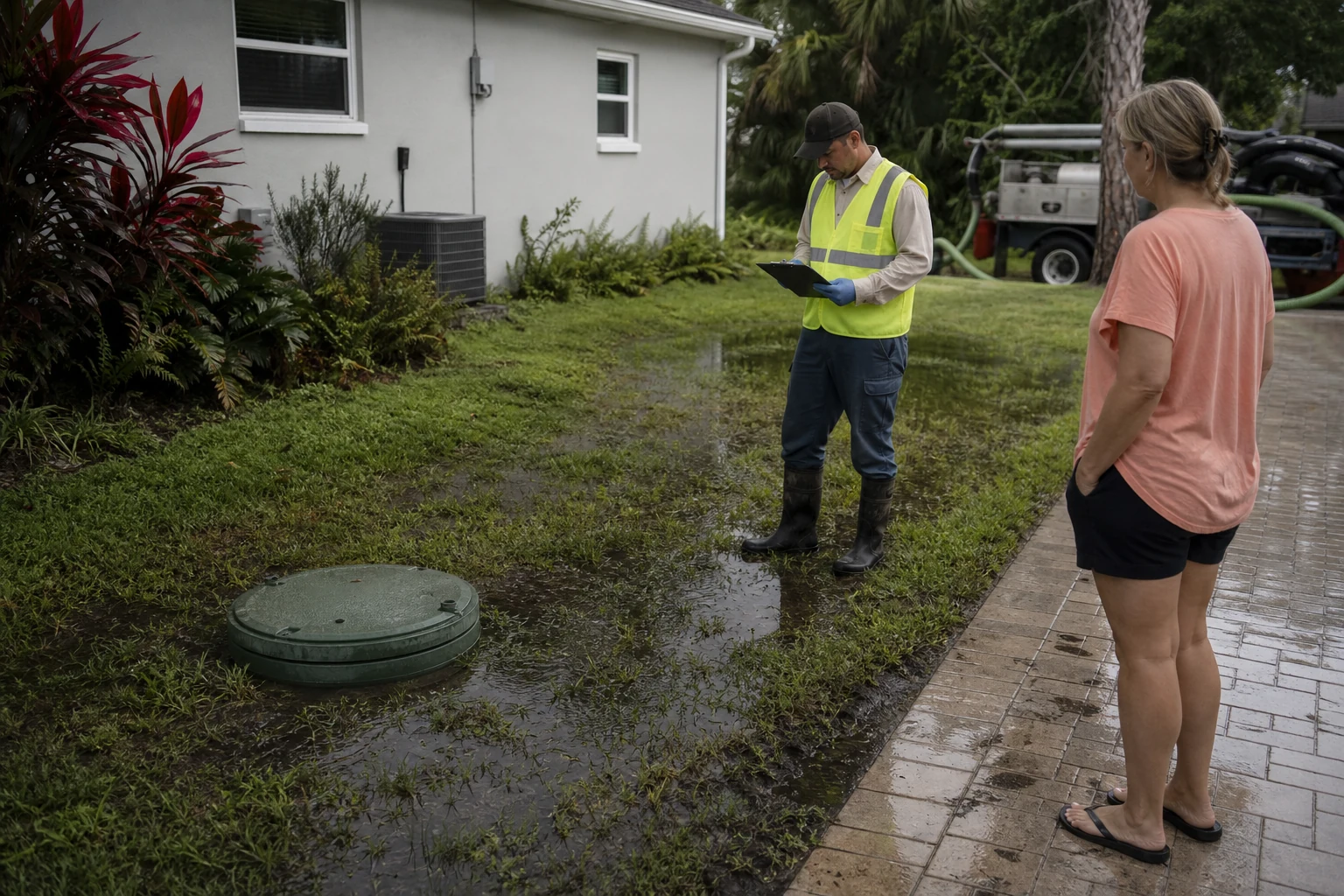
| Private septic system or drainfield is flooded or saturated | Flush as little as possible | Reduce laundry, dishwasher, bathing, and other nonessential flow | Local health guidance and qualified septic professional |
| Boil-water notice with no wastewater restriction | The sewer may still operate; follow all current notices | Use supply water only as the notice allows; the notice defines drinking, cooking, ice, brushing, washing, and other uses | Serving drinking-water provider plus any separate wastewater notice |
| Private well was flooded or the well/pump was damaged | Wastewater capacity is a separate question | Do not drink or wash with well water until the well is inspected, disinfected, and tested or cleared as directed | Florida/local health guidance and qualified well professional |
| No active notices, no backup symptoms, and services are confirmed | Resume only as directed | Follow any utility flushing or return-to-service steps before normal use | Serving utility or private-system professional |
A boil-water notice concerns water-supply use; a sewer restriction concerns wastewater disposal. They can occur together or separately, so check both.
Choose the branch that actually serves the property
Provider boundaries and private systems can change within the same community. Confirm the system from a utility bill, service record, property record, or building contact instead of guessing from the mailing address.
Check the wastewater authority first
Report a neighborhood overflow, manhole discharge, street-side break, area-wide backup, or service notice. The utility determines public-system status; a plumber handles private piping after that boundary is clear.
Reduce water use and wait for safe assessment
CDC and EPA guidance says to limit flushing and household flow. Do not pump the tank while the system is flooded or the water table is high; a tank can be damaged or move when surrounding pressure is high.
Keep it out of drinking and washing use
A flooded well may be contaminated. Follow Florida and EPA guidance for professional inspection, disinfection, sampling, and testing before normal use.
Add the building contact
A pump, shared drain, stack, lateral, common-area pipe, or building shutoff may require management or association coordination before a unit plumber can proceed.
Do not reset flooded electrical equipment
Follow the utility, building, manufacturer, and qualified electrical or pump-service instructions. Do not open a wet panel or repeatedly test an alarmed system.
Use the official Tampa Bay contact that serves the property
These are starting points, not a complete provider map. Confirm the provider on the property's bill or service record and use the current page in case numbers or instructions change.
Swipe sideways to see every column| Situation | Official starting point | Current contact | Use it for |
|---|---|---|---|
| Immediate threat to life, fire, gas, electricity, or structural safety | Emergency services | 911 | Immediate danger—not a routine plumbing or cleanup request |
| City of Tampa sewer backup or overflow | City of Tampa Wastewater | 24/7: (813) 247-3451 | Sewer emergency, backup, overflow, or neighborhood overflow |
| Hillsborough County water or sewer emergency | Hillsborough Water Resources | (813) 307-1000 | Water/sewer main breaks, sewer emergency entering the home, or related property damage |
| City of St. Petersburg water or sewer issue | St. Petersburg utility FAQs | Water Resources: (727) 893-7261 | Sewage backup, City/private boundary check, or water-resource assistance |
| Pinellas County Utilities water or sewer issue | Pinellas Utilities Services | 24-hour line: (727) 464-4000 | Utility emergencies and current customer-service routing |
| City of Clearwater utility emergency | Clearwater water emergency reporting | (727) 462-6633 | Gas leak, water leak, water-main break, outage, or utility emergency |
| Sarasota County sewer leak, backup, or emergency | Sarasota water and sewer emergency reporting | (941) 861-6790 | County sewer leaks, backups, emergencies, and municipality-specific numbers |
| Drinking-water restriction | City of Tampa boil-water notices | Use the notice for the exact service area | What supply water may be used for and any flushing or clearance steps |
| Private septic or private well | Florida Department of Health: private wells | Use the local county health department and qualified system professional | Health guidance, sampling/testing route, and local private-system questions |
| Private pipe, fixture, water heater, or building drain after hazards are cleared | Plumbers in Tampa Bay emergency-plumbing directory | Contact the selected business directly | Private plumbing diagnosis and repair—not public-system clearance |
City and county boundaries do not prove which utility serves a property. If the property is in St. Petersburg, Clearwater, Sarasota, Pasco, Manatee, or another service area, use that serving authority's current emergency page.
The first safe hour after re-entry
This sequence begins only after the responsible authority permits re-entry and the path is free of immediate electrical, gas, structural, and floodwater hazards.
Stop at any new hazard
Leave again for water near electricity, gas odor, structural movement, active sewage, unstable floors, or a blocked safe path. Do not continue because re-entry was generally announced.
Confirm the water provider and wastewater system
Record public water or private well, public sewer or private septic, and any building-level pump or shared system. Use a current bill, service record, or manager—not an assumption.
Check live water and sewer notices separately
Save the notice URL, date, time, affected area, and instructions. A supply-water notice does not automatically describe wastewater capacity.
Pause the fixtures that could worsen the condition
Stop affected fixtures and high-flow appliances when wastewater capacity is uncertain, a backup is active, or septic ground is saturated.
Document from a dry location
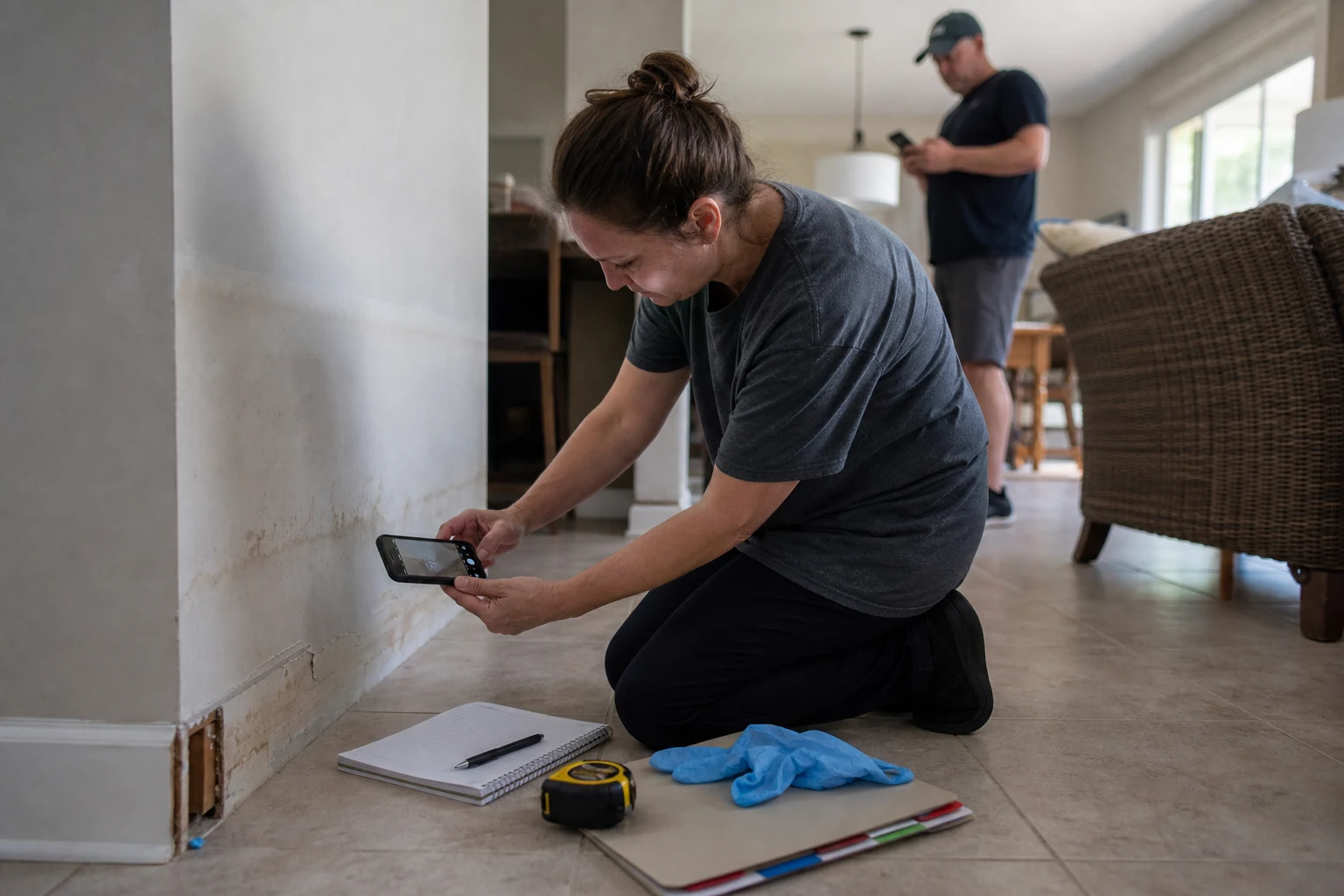
Photograph visible water lines, affected fixtures, backups, stains, displaced equipment, and existing conditions before cleanup or permanent repair when it is safe.
Call the responsible boundary first
Use emergency services for danger, the utility for public service, the building contact for shared systems, septic or well professionals for those private systems, and a plumber for private building plumbing.
Record who cleared what
A general re-entry notice, water clearance, sewer clearance, well test, septic assessment, electrical clearance, and plumbing repair are separate records. Keep each one.
Quick answers to common post-flood plumbing questions
These answers identify the decision—not a property-specific clearance.
Swipe sideways to see every column| Question | Short answer | What decides it |
|---|---|---|
| Can I flush the toilet? | Only after safe re-entry and when the wastewater path is confirmed. Flush as little as possible on a flooded or saturated septic system. | Public sewer status, backup symptoms, septic saturation, and building instructions |
| Can I take a shower? | Not until supply water is allowed for that use and wastewater can drain safely. | Boil-water or well guidance plus sewer, septic, and drain status |
| Can I run the washing machine or dishwasher? | Avoid high-flow appliances while wastewater capacity is uncertain or septic ground is saturated. | Wastewater notice, drain symptoms, septic condition, and supply-water instructions |
| Should I pump a flooded septic tank? | Not while the system is flooded or the water table is high. Use a qualified septic professional after conditions permit assessment. | CDC, EPA, Florida health guidance, site condition, and professional inspection |
| Is clear-looking floodwater safe? | No. Appearance and odor cannot rule out sewage, chemicals, debris, or electrical hazards. | Public-health guidance and qualified assessment—not visual judgment |
| Does a boil-water notice mean the sewer is offline? | Not necessarily. Drinking-water use and wastewater service are separate systems and notices. | The serving water provider and wastewater authority |
| When should I call a plumber? | After access is safe and public-system or building-wide conditions are checked, for private pipes, fixtures, water heaters, drains, and property-side damage. | System boundary and written scope |
Do not turn a plumbing check into contaminated-water cleanup
Floodwater and sewage can expose a household to biological, chemical, physical, mold, and electrical hazards. This guide does not instruct a homeowner to pump, vacuum, drain, disinfect, open a cleanout, enter a crawlspace, restart wet equipment, or remove contaminated materials. Follow current CDC, EPA, local public-health, utility, insurer, and qualified cleanup guidance for the actual condition. Keep children, pets, food-contact items, and bare skin away from affected water and materials.
- Do not use a household vacuum on water.
- Do not power on flooded HVAC, pumps, appliances, outlets, or panels to test them.
- Do not pour floodwater or cleanup chemicals into an uncertain sewer or septic system.
- Do not assume a plumber, restoration company, electrician, septic professional, utility, or insurer performs the same role; ask for the written scope.
Build one recovery record instead of scattered messages
A clear chronology helps utilities, building contacts, plumbers, septic or well professionals, cleanup teams, and insurers understand what happened and what has already been cleared.
Property and system
- Property address and safe-re-entry date and source
- Water provider or private-well status
- Wastewater provider or private-septic status
- Condo, HOA, rental, property manager, or building emergency contact when applicable
Notices and observations
- Water, sewer, flood, evacuation, and re-entry notice links with dates and times
- Visible water line, source if known, affected rooms and fixtures, odors, sounds, and backup symptoms
- Safe photos or video taken before cleanup or permanent repair
- Neighbor or building-wide symptoms without identifying private personal information
Calls, tests, and clearance
- Authority or business contacted, time, reference number, and instructions
- Well sampling, disinfection, and test results when applicable
- Septic, electrical, HVAC, gas, structural, plumbing, and cleanup scopes when applicable
- Who cleared each service for what use, remaining restrictions, and next review date
Use a plumber for the private plumbing boundary
A plumber is the appropriate next call after safe access when the problem is within the property's pipes, fixtures, water heater, private building drain, shutoff, or other plumbing component. Tell the business whether re-entry is cleared, whether the property uses public sewer or septic and public water or a private well, which notices are active, where water appeared, which fixtures are affected, and whether the utility or building contact has responded. Ask for a written diagnosis and scope; do not ask a plumber to declare public water safe, clear a public sewer, test a private well, decide structural or electrical safety, or determine insurance coverage.
- Report the system type and all active official notices before the visit.
- Describe one-fixture versus several-fixture symptoms and whether neighbors or other units are affected.
- State any access restriction, contamination concern, or electrical clearance still pending.
- Request the observed failure, location, what it serves, immediate work, permanent work, and excluded restoration in writing.
Related next steps
Use the guide that matches the situation.
How this resource was made
Methodology and limits
This guide was reviewed on August 27, 2026 against current CDC, EPA, FEMA/NFIP, Florida Department of Health, Florida emergency-management, City of Tampa, Hillsborough County, and Pinellas County flood, water, wastewater, septic, private-well, and recovery guidance. It separates conditions that many general flood articles combine: safe entry, supply-water use, wastewater disposal, private systems, and private plumbing.
- Conditions and official notices can change by address and event; the serving authority's current instruction always controls.
- Water appearance, odor, or a photo cannot establish contamination, electrical safety, structural safety, or system condition.
- This guide does not authorize entry, contaminated-water cleanup, electrical or gas work, septic pumping, well disinfection, or plumbing repair.
- Provider boundaries do not always follow city or county lines; confirm the water and wastewater provider shown on the property's service record or bill.
Sources
Reviewed sources
- Safety Guidelines: Reentering Your Flooded HomeCenters for Disease Control and Prevention · Reviewed 8/17/2026
- Floodwater After a Disaster or EmergencyCenters for Disease Control and Prevention · Reviewed 8/26/2026
- Guidelines for Septic and Onsite Wastewater SystemsCenters for Disease Control and Prevention · Reviewed 8/26/2026
- FloodingU.S. Environmental Protection Agency · Reviewed 8/17/2026
- Septic Systems: What to Do After the FloodU.S. Environmental Protection Agency · Reviewed 8/27/2026
- What to Do With Your Private Well After a FloodU.S. Environmental Protection Agency · Reviewed 8/26/2026
- Flooding and Your Septic SystemFlorida Department of Health · Reviewed 8/26/2026
- Private Well Water TestingFlorida Department of Health · Reviewed 8/27/2026
- Flood Recovery ChecklistNational Flood Insurance Program · Reviewed 8/27/2026
- Documenting Damage After a DisasterFederal Emergency Management Agency · Reviewed 8/26/2026
- Plan and PrepareFlorida Division of Emergency Management · Reviewed 8/26/2026
- Boil Water NoticesCity of Tampa Water Department · Reviewed 8/26/2026
- Contact Us: WastewaterCity of Tampa Wastewater Department · Reviewed 8/27/2026
- Report Water and Sewer Main Pipe BreaksHillsborough County · Reviewed 8/17/2026
- Utility Billing FAQsCity of St. Petersburg Utility Portal · Reviewed 8/27/2026
- Utilities ServicesPinellas County · Reviewed 8/27/2026
- Safety Tips: Before, During and After a FloodPinellas County · Reviewed 8/27/2026
- Report a Gas Leak, Water Leak, or Other Water EmergencyCity of Clearwater · Reviewed 8/26/2026
- Sewer Leaks and Sewer EmergenciesSarasota County · Reviewed 8/26/2026
- Private Sewer Lateral Program FAQsPinellas County · Reviewed 8/26/2026
Reviewed by Plumbers in Tampa Bay on 8/27/2026.