Tampa Bay homeowner guide
Emergency triage guideWhat to do during a plumbing emergency before help arrives
Put safety first. Stay away from water near electricity, gas-related concerns, or wastewater; call emergency services for immediate danger; and only reduce water flow if you know the correct shutoff and can reach it safely. Then prepare a clear description for a qualified plumber.
On this page
The short answer
What to do first
Move people away from electricity, gas odor, fire, structural danger, wastewater, and an unsafe route before trying to control water. Call 911 for immediate danger and the responsible utility for a public-service hazard. If the route is dry and safe, use only a familiar private fixture or main shutoff without forcing it, then prepare a concise incident record for the plumber, building contact, utility, or insurer.
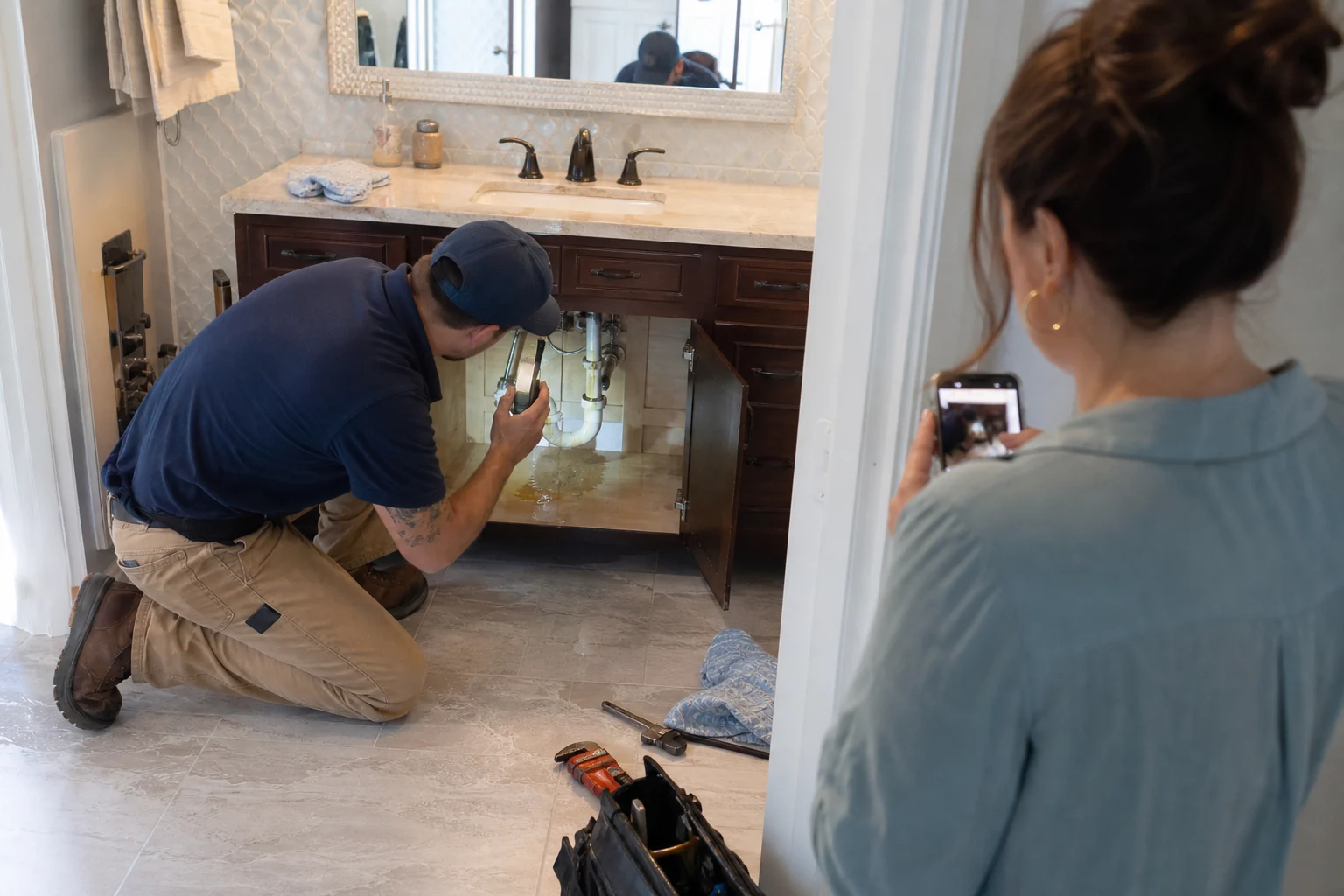
Five things to remember
- Life safety and contamination come before property protection.
- Use only a known private shutoff on a safe route.
- Do not operate utility, shared-building, gas, fire, well, or unknown controls.
- Choose 911, utility, building contact, septic professional, or plumber by boundary.
- Record the source, flow, affected fixtures, hazards, controls used, and access.
Print the emergency information card
Keep private shutoff, utility, building, plumber, and incident details in one safe household record.
Make the first call match the hazard and boundary
Leave and call 911
Do not attempt plumbing control first.
Call the serving utility
Keep out of roads, vaults, manholes, and utility equipment.
Notify the emergency building contact
Shared controls, access, damage response, and private repair can require separate calls.
Use a known control and call a plumber
Describe flow, fixtures, water type, shutoff status, and access.
The first ten minutes, without creating a second emergency
Protect people
Move away from electrical, gas, structural, fire, wastewater, and flood hazards.
Choose the correct responder
911, utility, building contact, septic professional, or private plumber based on the boundary.
Control only what is known and safe
Use a familiar private fixture or main valve without force; otherwise wait for the responsible responder.
Document and prepare access
Record time, source, flow, affected areas, hazards, controls, contacts, and safe photos.
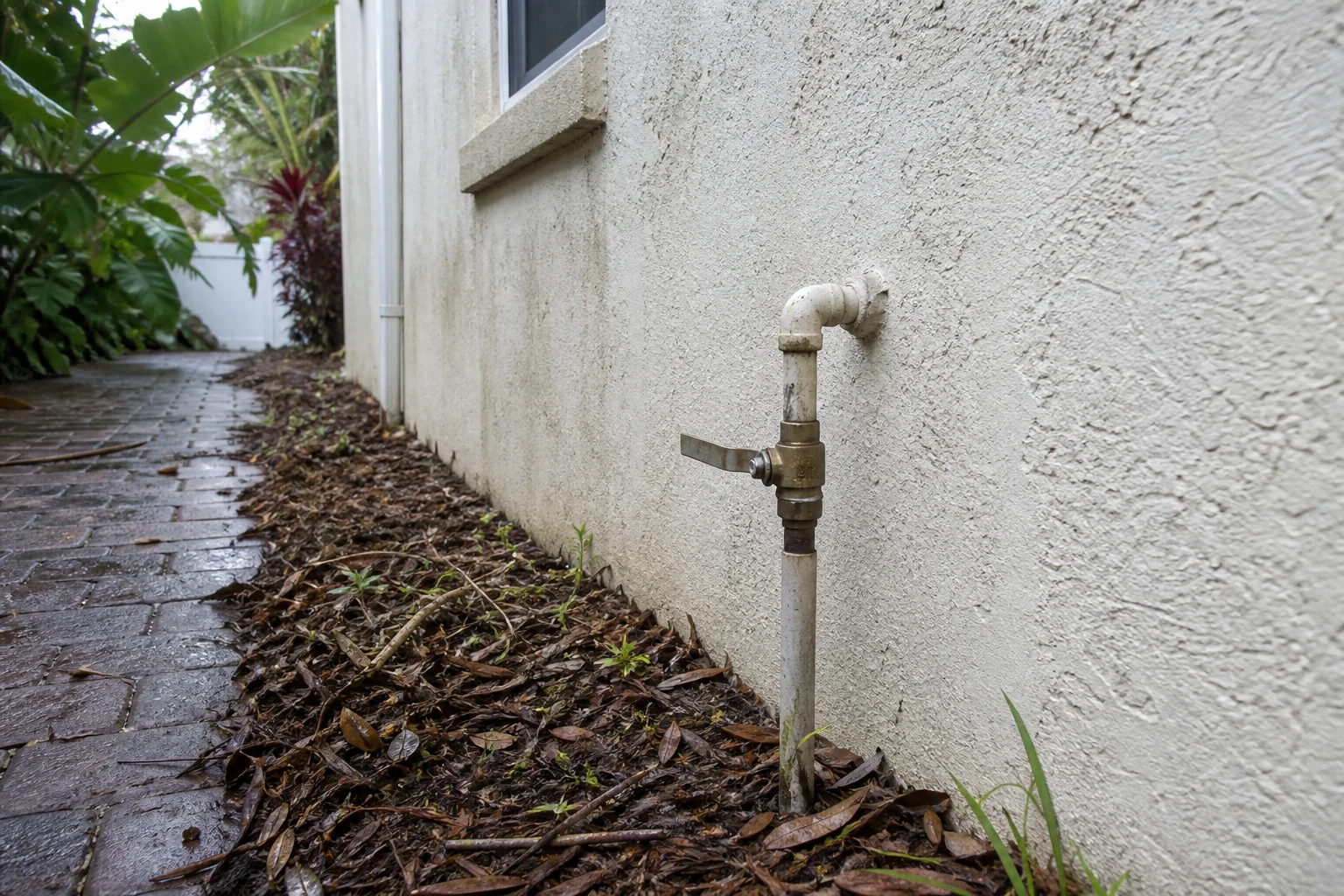
Who handles which first boundary
Swipe sideways to see every column| Observation | First contact | Prepare |
|---|---|---|
| Immediate life-safety danger | 911 | Location, people at risk, visible hazard |
| Public water or sewer event | Serving utility | Exact address, street location, incident pattern |
| Shared building system | Manager, landlord, or association | Units/areas affected, access, emergency number |
| Private septic | Qualified septic professional and health guidance | Flooding, use, outdoor symptoms, last service |
| Private building plumbing | Qualified plumber | Source, flow, affected fixtures, shutoff, access, hazards |
Give the responder a decision-ready call
Condition
- Exact address and safe entrance
- Water type: supply, wastewater, floodwater, or unknown
- Still flowing, controlled, intermittent, or unknown
Impact
- Fixtures, rooms, units, ceilings, walls, yard, or street affected
- Electricity, gas, structure, heat, contamination, or access hazards
- Essential service unavailable
Actions
- Controls used and by whom
- Utility/building incident number
- Photos, prior symptoms, repair history, and products used
Stopping visible flow is stabilization—not completion
The source, damaged component, trapped water, contamination, drying, electrical safety, access restoration, permit questions, and permanent repair may all remain separate workstreams.
Related next steps
Use the guide that matches the situation.
How this resource was made
Methodology and limits
The guide separates immediate safety, public utilities, private plumbing, shared buildings, septic, and documentation instead of treating every water problem as a plumber-only call.
- It cannot inspect the property or replace emergency instructions.
- Ownership and emergency contacts vary by address.
- Never delay evacuation or emergency services to complete a checklist.
Sources
Reviewed sources
- FloodsReady.gov · Reviewed 8/27/2026
- FloodingU.S. Environmental Protection Agency · Reviewed 8/17/2026
- Sanitary Sewer OverflowsU.S. Environmental Protection Agency · Reviewed 8/17/2026
- Documenting Damage After a DisasterFederal Emergency Management Agency · Reviewed 8/27/2026
Reviewed by Plumbers in Tampa Bay on 8/27/2026.