Tampa Bay homeowner guide
Interactive + printable checklistA seasonal plumbing checklist built for Tampa Bay homes
Tampa Bay plumbing readiness is less about winterizing and more about hurricane season, heavy rain, flood exposure, long absences, year-round leaks, and knowing who controls each system. Use this calendar to schedule safe observations before an emergency instead of discovering missing information during one.
On this page
The short answer
What to do first
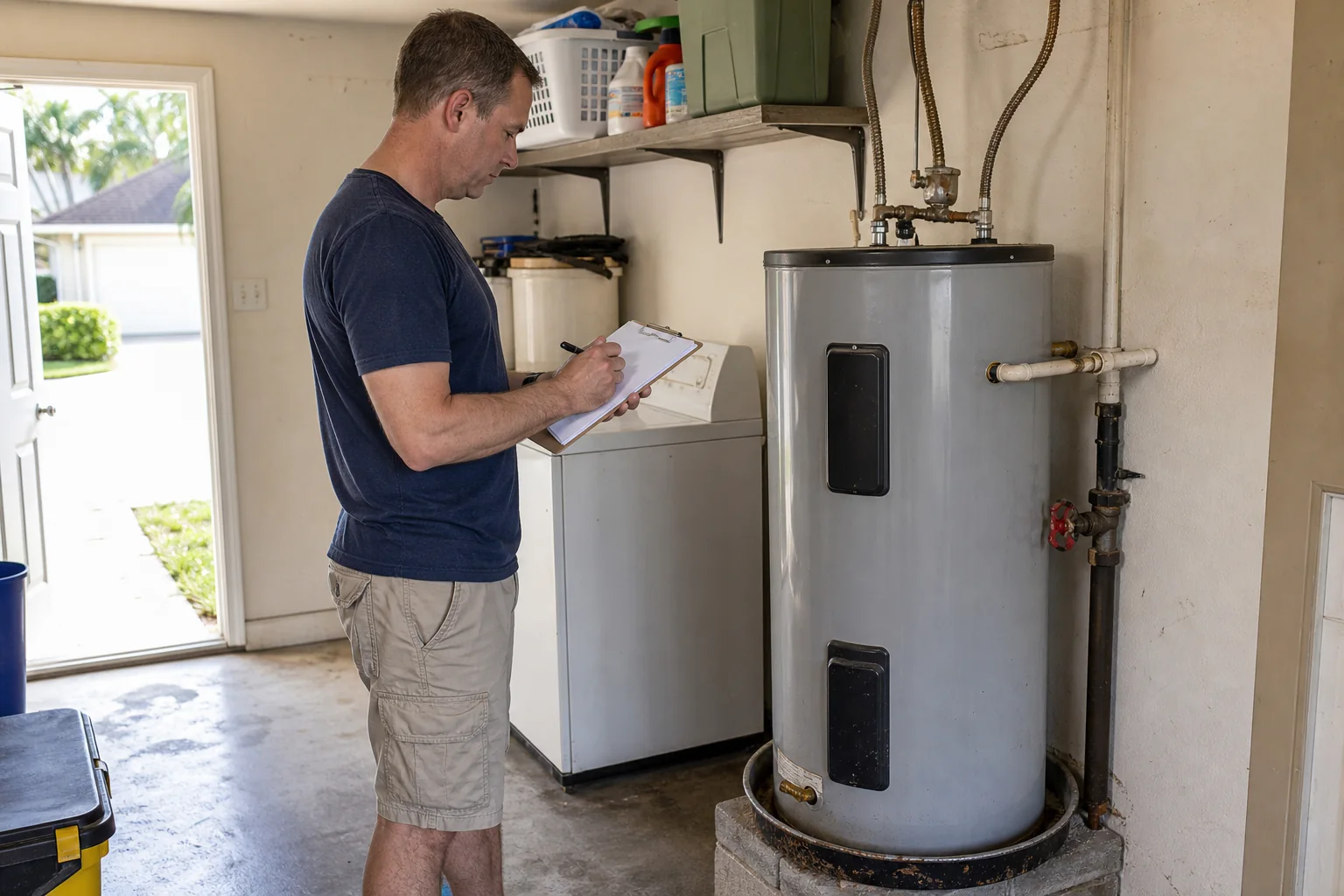
Use four checkpoints: a pre-hurricane-season review, a rainy-season observation routine, a post-storm safety review, and one annual household record update. Check only what is visible and safely accessible. The goal is not do-it-yourself repair; it is to catch changes early, know the correct contacts, and make a future service call more accurate.
Five things to remember
- The Atlantic hurricane season runs June 1 through November 30, but readiness work should begin before June.
- Know the safe route to a confirmed private water shutoff; never guess at utility or shared controls.
- Track small leaks and pressure or drainage changes instead of waiting for a larger failure.
- After a storm, clear re-entry, power, drinking water, wastewater, septic or well, and private plumbing separately.
- Keep dated photos, contacts, and service records in one household location.
Print the Tampa Bay plumbing calendar
A one-page seasonal checklist plus a household system and contact record.
Private browser checklist
Build a Tampa Bay plumbing year in under ten minutes.
Selections stay in this browser session. Checking an item means you reviewed it; it does not certify condition or safety.
For a paper record that can be kept with household documents, use the printable calendar and leave passwords, access codes, and full account numbers off the sheet.
The Tampa Bay plumbing year at a glance
The dates are planning prompts, not deadlines or proof of safety.
Update the household record
Confirm the serving water and wastewater provider, property contacts, preferred plumber, insurance instructions, system type, and document location.
Complete the pre-season review
Finish safe access, visible-condition photos, shutoff confirmation, drain and leak notes, and planned professional service before June.
Shift into hurricane-season readiness
The official Atlantic season begins June 1. Keep alerts, records, and the current household plan accessible.
Review rainy-season patterns
Compare recurring drainage, yard saturation, pressure, moisture, and utility-notice patterns; do not diagnose from weather alone.
Close the record and plan next year
Save invoices, permits where applicable, warranties, changed photos, and any unresolved item that should be scheduled before the next season.
Before hurricane season: make the emergency path boring and familiar
Contacts and authority
- Confirm the actual water and wastewater provider from the address
- Record landlord, association, property manager, septic, well, and insurer contacts that apply
- Bookmark county/city emergency management and utility notice pages
- Review household evacuation and emergency plans outside this plumbing checklist
Controls and access
- Have the private household shutoff identified by the right professional or provider
- Keep the dry, safe access route visible and unobstructed
- Label only confirmed private controls
- Resolve a corroded, leaking, buried, inaccessible, or uncertain control before urgent weather
Condition and records
- Take dated photos of safely visible plumbing and equipment areas
- Record existing leaks, stains, corrosion, drainage, pressure, and equipment concerns
- Save manuals, permits where required, warranties, and service records
- Schedule unresolved work early enough to avoid last-minute demand
During heavy-rain months, record patterns without turning weather into a diagnosis
Swipe sideways to see every column| Observation | Record | Next safe step |
|---|---|---|
| Several drains slow or gurgle after heavy rain | Fixtures, timing, rainfall, utility notices, and whether neighbors are affected | Reduce water use if symptoms worsen and use the sewer/septic/drain decision guide |
| Outdoor wet area or odor near a septic area | Location, weather, recent use, and service history | Keep away and contact a qualified septic professional; do not drive or dig over the area |
| Water bill or meter pattern changes | Billing period, household changes, meter observations made under safe utility instructions | Use the hidden-leak guide and contact the provider or plumber as appropriate |
| Pressure changes across the property | Hot/cold, one fixture/whole property, time, and utility notices | Use the low-pressure guide; contact the utility for area-wide or service-side concerns |
| Moisture appears after wind-driven rain | Weather direction, roof/wall/window clues, plumbing use, and photos | Do not label it a plumbing leak from timing alone; use qualified building and plumbing assessment |
After a storm, clear each system separately
Do not enter to inspect plumbing
Use current emergency-management and property-authority instructions.
Leave and use emergency or utility help
A household water shutoff does not clear electrical, gas, fire, or structural hazards.
Follow the serving provider's current instructions
Supply-water clearance is separate from drainage, sewer, septic, well, and private piping.
Use the dedicated safety branch
Do not resume fixture use simply because power or public water returned.
Document and arrange qualified assessment
Describe changes since the pre-storm record and avoid destructive investigation.
Once a year: update the parts a future plumber will actually need
Visible water use
- Review bills and known household-use changes
- Note recurring toilet, faucet, appliance, irrigation, or outdoor leakage
- Record unexplained meter movement only under provider guidance
- Update repairs and whether the symptom returned
Equipment and drains
- Review visible water-heater condition and manufacturer service guidance
- Note recurring clogs, gurgling, odors, or multi-fixture patterns
- Record backflow or cross-connection testing obligations that apply
- Review septic service records or public-sewer notices as applicable
Records and access
- Update contact names and numbers
- Replace outdated photos after system changes
- Confirm emergency access remains clear
- Store records where household members can find them without passwords or sensitive account data
Before leaving a Tampa Bay property unoccupied
Swipe sideways to see every column| Decision | What to confirm | Why it helps |
|---|---|---|
| Property contact | A person authorized to access the property and make defined decisions | A distant owner cannot inspect a new alert or leak |
| Water and equipment plan | Qualified advice for the property, equipment, insurer, association, and expected absence | A universal shutoff or equipment setting is not appropriate for every home |
| Monitoring | What device or service is used, who receives alerts, and what action follows | An alert without an access and response plan may not reduce damage |
| Storm plan | Evacuation, re-entry, shutters, drainage, utility, and property-management responsibilities | Plumbing readiness is only one part of property safety |
| Return inspection | Safe re-entry, utilities, visible condition, odors, sounds, meter/bill changes, and records | The first normal fixture use should not be the first property check |
Route each seasonal issue to the right boundary
Swipe sideways to see every column| Issue | Likely first contact | Related resource |
|---|---|---|
| Immediate danger, evacuation, floodwater, gas, or electricity | Emergency services or responsible utility | Floodwater plumbing safety |
| Public water outage or notice | Serving water provider | Hurricane plumbing preparation |
| Backup, septic, or sewer pattern | Serving wastewater utility, plumber, septic professional, or property contact based on system | Sewer, septic, or drain guide |
| Private leak or repeated plumbing symptom | Qualified plumber | Hidden water leak guide |
| Shared building or association system | Property manager, landlord, association, and appropriate professional | Florida condo and HOA plumbing responsibility |
Use one dated record instead of a drawer of disconnected receipts
For each observation or service visit, save the date, symptom, affected area, safe photographs, who was contacted, written scope, work completed, permits or inspections where applicable, warranty, and whether the symptom returned. Keep access information and account secrets out of the public or printed record.
- Record the exact property and system involved.
- Separate observation from diagnosis.
- Separate temporary stabilization from permanent repair.
- Link each invoice, permit, inspection, photograph, and warranty to the same project date.
- Carry unresolved items into the next seasonal review instead of silently checking them off.
Related next steps
Use the guide that matches the situation.
How this resource was made
Methodology and limits
The calendar combines official hurricane timing and preparedness guidance with water-efficiency, leak, flood, and local storm resources. Tasks are limited to low-risk observation, documentation, contact preparation, and qualified-service planning.
- A universal calendar cannot reflect every property, manufacturer, utility, association, insurer, septic, well, or permit requirement.
- A completed checkbox does not certify condition, safety, compliance, or future performance.
- The interactive checklist is stored only in the current browser session and does not collect property information.
Sources
Reviewed sources
- Tropical Cyclone ClimatologyNational Hurricane Center · Reviewed 8/27/2026
- FloodsReady.gov · Reviewed 8/17/2026
- WaterSenseU.S. Environmental Protection Agency · Reviewed 8/17/2026
- Home Maintenance: LeaksU.S. Environmental Protection Agency · Reviewed 8/17/2026
- Leak Detection and Flow Monitoring DevicesU.S. Environmental Protection Agency · Reviewed 8/27/2026
- Energy SaverU.S. Department of Energy · Reviewed 8/17/2026
- Prepare Ahead of a StormCity of Tampa · Reviewed 8/17/2026
- Sustainable Hurricane PreparationCity of Tampa · Reviewed 8/26/2026
- Hurricane InformationCity of Tampa Emergency Management · Reviewed 8/26/2026
- Check for LeaksCity of Tampa Water Department · Reviewed 8/27/2026
- Hurricane and Tropical Storm PreparednessHillsborough County · Reviewed 8/26/2026
- Preparing Your Home for Severe WeatherPinellas County · Reviewed 8/17/2026
- Safety Guidelines: Reentering Your Flooded HomeCenters for Disease Control and Prevention · Reviewed 8/17/2026
Reviewed by Plumbers in Tampa Bay on 8/27/2026.